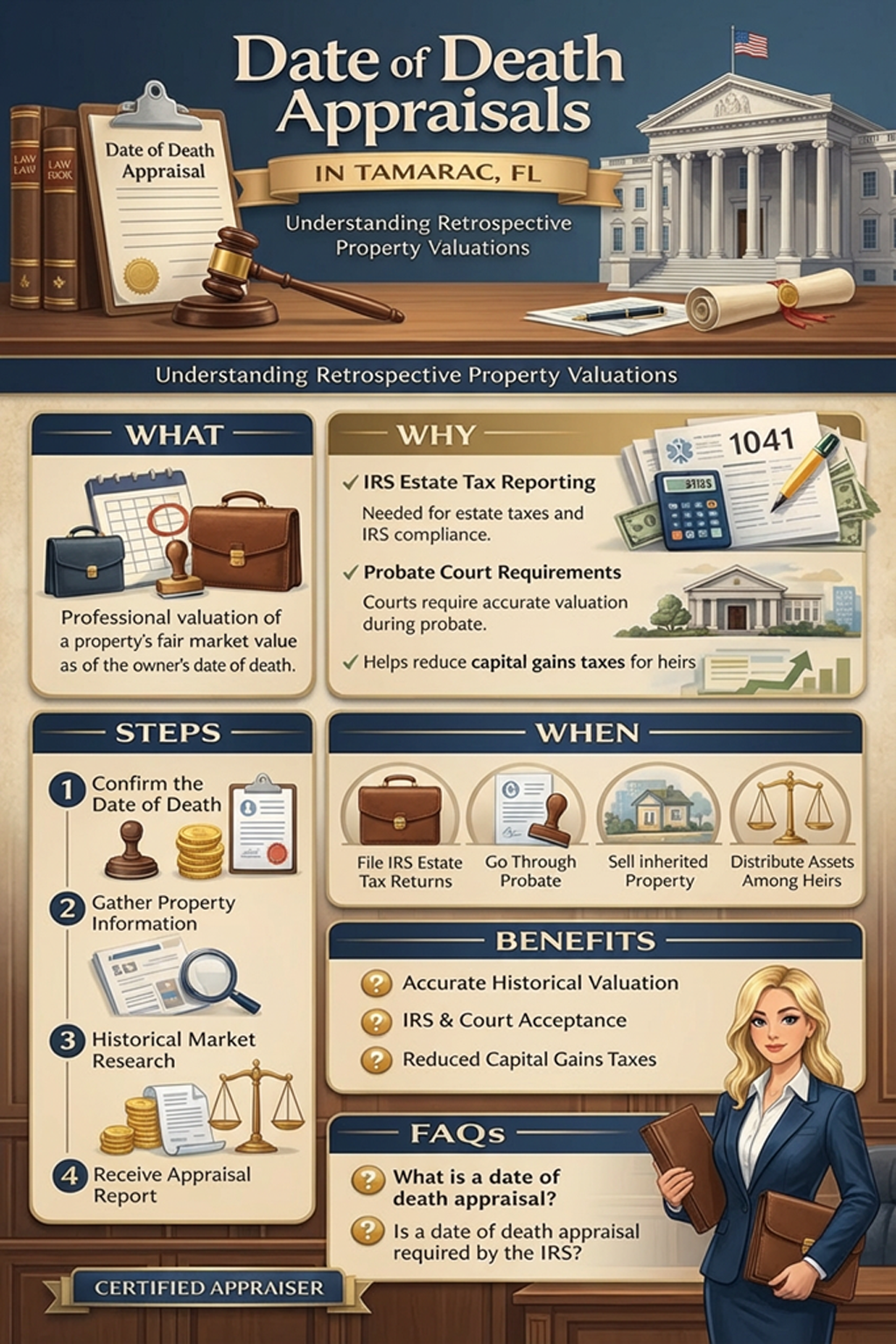
Date of Death Appraisals in Tamarac, FL
Accurate and Certified Date of Death Appraisals in Tamarac, Florida
When a property owner passes away, determining the property's value at the exact time of death is essential. Date of Death Appraisals provide a legally compliant, retrospective valuation used for probate, IRS reporting, and inheritance purposes.
Whether you're an executor, attorney, CPA, or beneficiary, a professionally prepared date of death appraisal ensures accuracy, compliance, and peace of mind during a complex process.
📞 Call us today at (954) 263-1312 📝 Or Request an Appraisal Online:
What Is a Date of Death Appraisal?
.A Date of Death Appraisal is a professional real estate valuation that determines the fair market value of a property as of the date the owner passed away.
Unlike standard appraisals that reflect current market value, date of death appraisals look backward in time. Appraisers analyze historical market data, comparable sales, and economic conditions that existed on that specific date.
This type of appraisal is commonly required for:
- Probate court proceedings
- Estate tax filings with the IRS
- Establishing stepped-up basis for capital gains
- Trust and estate planning
Why Date of Death Appraisals Are Important
IRS Tax Reporting and Compliance
The IRS requires accurate valuation of real estate assets when filing estate tax returns. A date of death appraisal ensures the correct fair market value is reported.
Establishing Stepped-Up Basis
One of the most important benefits of a date of death appraisal is determining the stepped-up basis. This can significantly reduce capital gains taxes if the property is later sold.
Probate and Legal Requirements
Courts often require a certified appraisal to ensure assets are fairly distributed among heirs and beneficiaries.
Avoiding Disputes Among Heirs
An unbiased, professional appraisal reduces the likelihood of disagreements regarding property value.
The Estate Appraisal Process
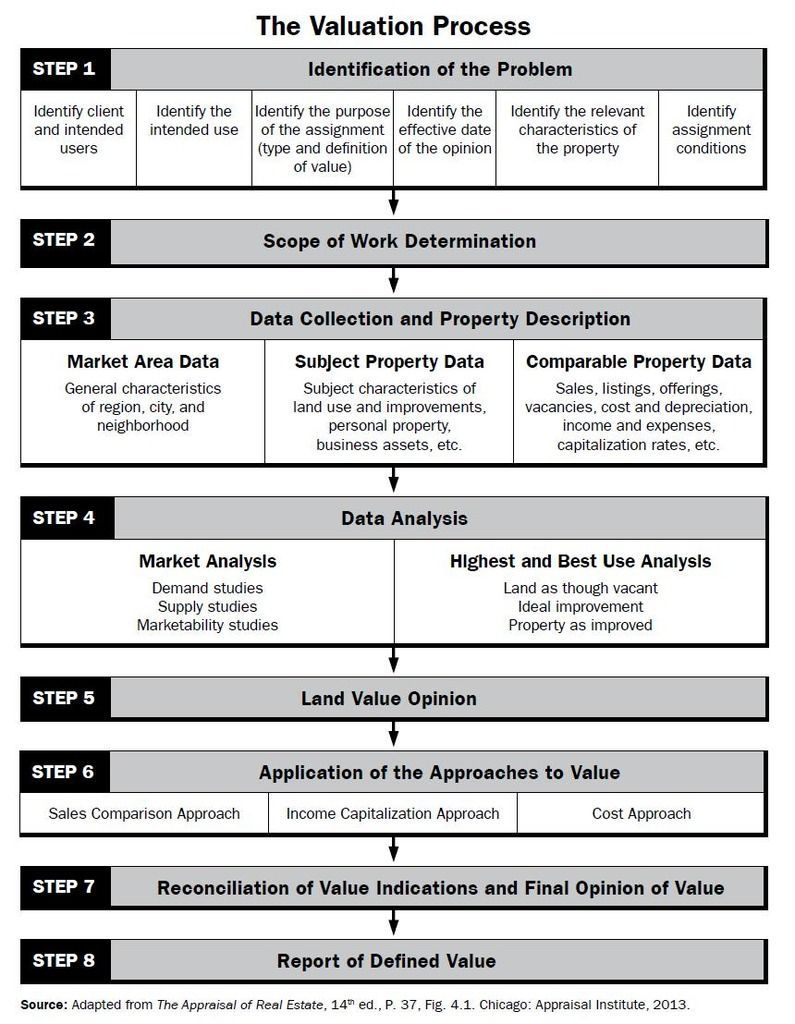
The Date of Death Appraisal Process
Understanding how date of death appraisals work can help you prepare and avoid delays.
1. Property Information & Effective Date
The appraiser confirms the date of death and gathers details about the property.
2. Historical Market Research
The appraiser researches comparable sales and market conditions from the time of death—not current data.
3. Property Inspection
In some cases, a current inspection is conducted to assess condition, with adjustments made based on historical context.
4. Comparable Sales Analysis
Sales data from the relevant time period is analyzed to determine accurate value.
5. Final Appraisal Report
A detailed, USPAP-compliant report is delivered for legal and tax purposes.
Key Factors That Affect Date of Death Appraisals
Several important factors influence the value in a date of death appraisal:
- Real estate market conditions at the date of death
- Comparable property sales from that time period
- Property condition and features
- Location and neighborhood trends
- Economic conditions (interest rates, demand, etc.)
Because these appraisals rely heavily on historical data, expertise is critical.
Date of Death Appraisals vs. Current Market Appraisals
Date of Death Appraisals
- Retrospective (past date value)
- Used for probate and IRS reporting
- Based on historical data
Current Appraisals
- Reflect present market value
- Used for buying, selling, or refinancing
- Based on current market conditions
This distinction is essential, as using the wrong type of appraisal can lead to legal and financial issues.
When Do You Need a Date of Death Appraisal?
You may need a date of death appraisal in the following situations:
- Filing estate tax returns
- Going through probate
- Selling inherited property
- Distributing assets among heirs
- Establishing tax basis for capital gains
Benefits of Professional Date of Death Appraisals
Accurate Historical Valuation
Ensures the property value reflects the correct time period.
IRS and Court Acceptance
Reports are prepared according to strict standards, making them legally defensible.
Reduced Tax Liability
Proper valuation can minimize capital gains taxes through stepped-up basis.
Peace of Mind
Provides clarity and reduces stress during estate settlement.
How to Prepare for a Date of Death Appraisal
To streamline the process, gather the following:
- Property address and details
- Date of death documentation
- Any previous appraisals or reports
- Information on property condition at time of death
Preparation helps ensure accuracy and faster turnaround times.
Call us today at (954) 263-1312 or Request an Appraisal Online
Frequently Asked Questions About Date of Death Appraisals
What is a date of death appraisal for a house?
A date of death appraisal determines the fair market value of a property on the exact date the owner passed away, typically for probate or tax purposes.
How far back can a date of death appraisal go?
Appraisers can perform retrospective valuations for many years back, as long as sufficient historical data is available.
Is a date of death appraisal required by the IRS?
Yes, in many cases the IRS requires accurate property valuation when filing estate tax returns.
How does a date of death appraisal affect capital gains tax?
It establishes the stepped-up basis, which can reduce capital gains taxes when the inherited property is sold.
How long does a date of death appraisal take?
Most reports are completed within a few days to a week, depending on complexity and data availability.
Who orders a date of death appraisal?
Typically, executors, attorneys, CPAs, or family members handling the estate request the appraisal.
Call us today at (954) 263-1312 or Request an Appraisal Online